
Parma Heights Previous Residents by Era
For a Parma Heights address, begin with the parcel and work backward through sources that describe separate evidence. The Recorder documents an instrument and its parties. A directory records a printed household or address at publication time. Archives maps and tax records help test a parcel's older form. Keeping those roles distinct avoids turning an old deed or directory line into a conclusion it cannot support.
| Source | Years It Covers | Where Held | What It Shows |
|---|---|---|---|
| MyPlace parcel display | Current portal, with daily transfer updates stated | Cuyahoga County Fiscal Officer | Parcel ID, situs form, current parcel context, and transfer links |
| Recorded document index | 1810-present | Cuyahoga County Recorder | Recorded instruments, parties, dates, legal descriptions, and document references |
| County tax records | 1819-1986 | Cuyahoga County Archives | Historic tax and property trail |
| Original map volumes | 1860-1945 | Cuyahoga County Archives | Street, lot, and parcel configuration context |
| Parma and West Suburban directories | 1941, 1946-1963, and selected 1964-1980 editions | Cleveland Public Library | Dated household and address listings |
Use a recent Parma Heights parcel view for the current spelling and parcel ID. Use the document index for a transfer trail. Move to directories only when the question is who was listed at the address in a specific publication year. For older Parma Heights parcel questions, the Archives offers maps, tax records, and atlases as a separate layer. This keeps a Parma Heights address tied to a source and date.
Start a Parma Heights Previous Residents Trail
Cuyahoga MyPlace is the current parcel starting point. Select Parma Heights, choose Address, and record the displayed situs spelling and Parcel ID. A situs address identifies the physical property presentation. A mailing address can be different because it is where notices are sent. The portal is a free public service, and its own notice says the original county record controls if the display differs.
Open the Parma Heights parcel's Transfers and Get a Document List paths before moving to an older party. Preserve the document number, recorded date, instrument date, grantor, grantee, legal description, and parcel reference. A change in lot wording, unit notation, parcel split or combination, or street spelling is a reason to pause and test continuity, not to force the address into one uninterrupted story.
Note: Label each address as situs, mailing, directory, or legal-description evidence so fields from different records are not blended.
Trace Parma Heights Previous Residents Through Deeds
Recorded documents are the backbone for a backward Parma Heights ownership trail. The Cuyahoga Recorded Document Search states coverage from 1810 to the present. Its index can lead from a parcel or address to an instrument, but the image and legal description must be read before treating a result as the same property. The page below is the Recorder's search route used to locate filed documents.
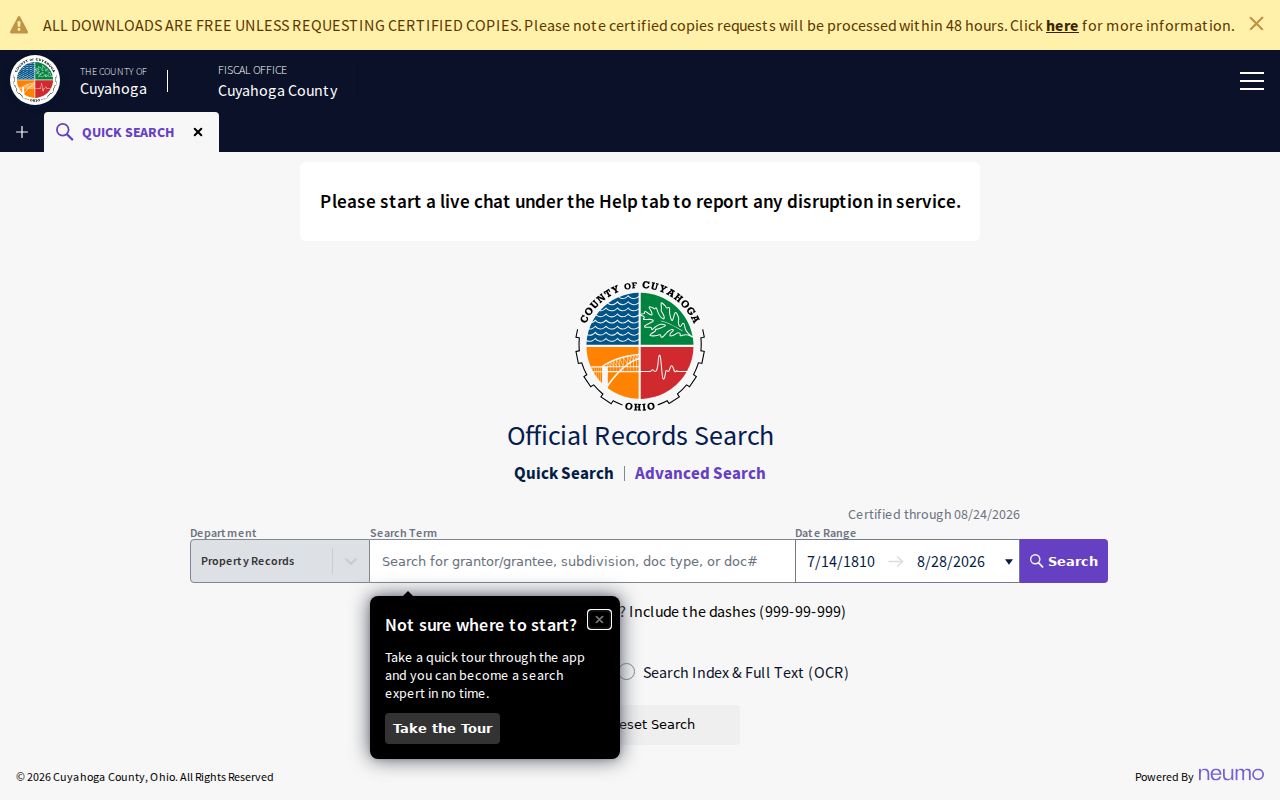
The index is a retrieval tool. For a Parma Heights property, the recorded image remains the place to verify the exact spelling, dates, parties, and property language.
- Open the current parcel in MyPlace and write down the Parcel ID, situs address, and any unit notation.
- Search the Recorder by Parcel ID or Property Address and narrow by recorded date when a result set is broad.
- Open a candidate entry and record the document number, recorded date, instrument date, document type, grantor, grantee, and legal description.
- Read the image and compare its lot, subdivision, unit, or parcel wording with the focal property.
- Search the earlier party or linked document to move back one transfer at a time.
- When the property description changes, use maps and tax records before continuing the chain.
| Document number | The stable identifier for ordering or citing a recorded instrument. |
|---|---|
| Recorded and instrument dates | They distinguish filing from the date the document was executed. |
| Grantor and grantee | The parties indexed to a recorded transaction. |
| Document type | Shows whether the result is a deed or another instrument. |
| Parcel, address, legal description | Anchors that should be compared across time. |
| Image and OCR | Open the image; OCR is a finding aid, not an authoritative transcription. |
Parma Heights Parcel IDs With Dashes
The Recorder's advanced search includes a Parcel ID field and displays a dashed 999-99-999 format hint. Enter the ID with dashes. If the Parma Heights parcel search does not produce a usable result, try Property Address, then use a recorded-date range or a party name. A document-number search offers another route after MyPlace has revealed a linked instrument.
| Recorder field | Format | Use in the trail |
|---|---|---|
| Party Names | LASTNAME FIRSTNAME autocomplete, with separate grantor and grantee fields | Move backward from a party on a verified transfer. |
| Recorded or instrument date | Start and end values displayed as MM/DD/YYYY | Narrow a large result set by time. |
| Document number | Single number or number range | Retrieve a known indexed instrument. |
| Parcel ID | Dashed identifier | Bridge a current parcel to the Recorder index. |
| Property Address | Text field | Retry historic spelling and directional variants carefully. |
| Index or OCR scope | Search Index Only or Index and Full Text | Use OCR to find candidates, then verify the image. |
Cuyahoga Property Alert is a free optional email layer for new real-property filings that match a name, entity name, keyword, or selected document. The county describes it as third-party managed and provided as-is. It can flag a filing for review, but it does not prove that every relevant document was captured.
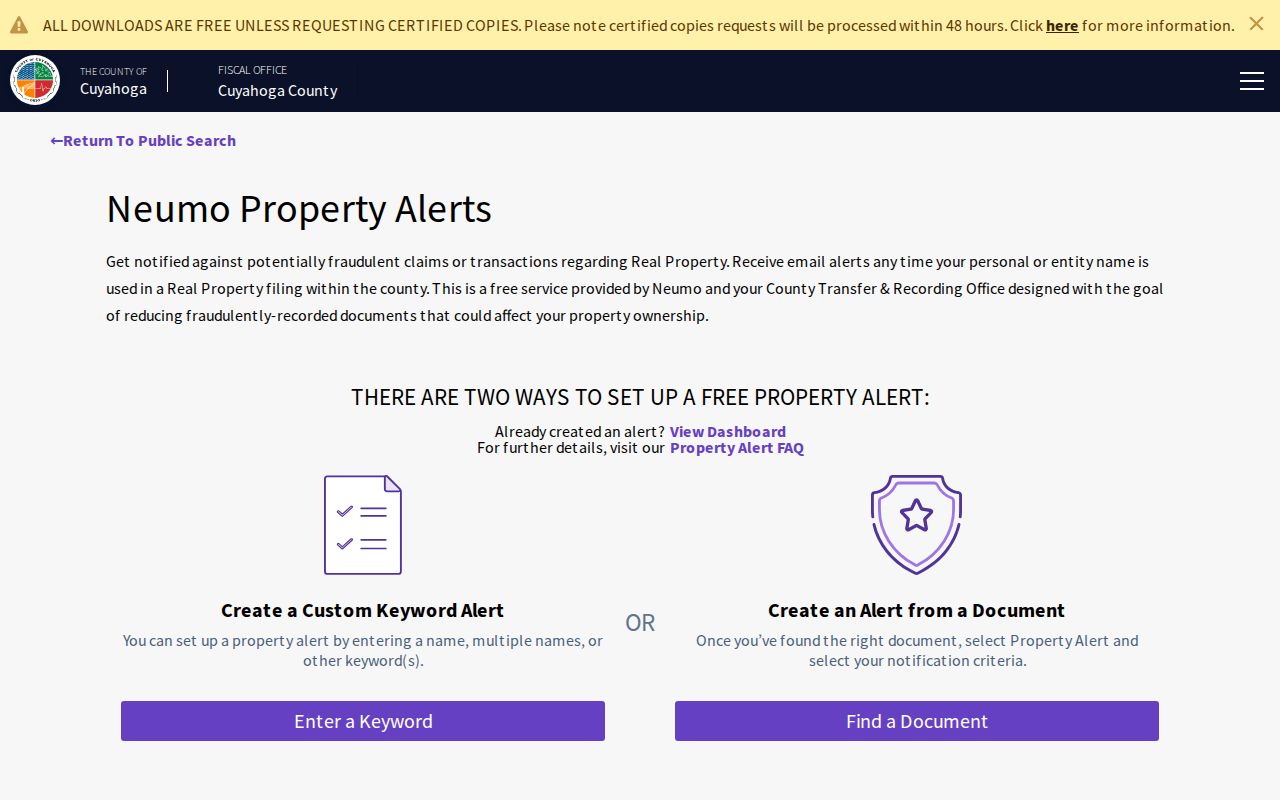
Keep a document number and original image with any alert-based follow-up instead of relying on an alert notice alone.
Parma Heights Previous Residents Terms
Parma Heights property records use compact legal language. Defining it before comparing entries helps keep a past-residents search focused on what each source proves. In particular, an address can change while a lot description stays important, and a name in a document can be a party to an instrument rather than the person who lived there.
- Grantor
- The party transferring an interest in a recorded instrument.
- Grantee
- The party receiving an interest in that instrument.
- Chain of title
- A sequence of recorded transfers traced backward through documents that describe the same property.
- Legal description
- The lot, subdivision, condominium, or other property wording in the instrument. It can be a stronger historic anchor than a street address.
- Criss-cross directory
- An address-first directory section used to see a printed address listing for a particular year.
- Enumeration district
- The geographic unit used to organize a census. It helps place a census page in its local context.
Note: A legal description should be compared to the focal property before a past transfer is treated as part of its chain.
Parma Heights Past Residents in Directories
A Parma Heights deed chain is not a list of occupants. It records parties to an instrument. A historic directory can show a listed household at a particular address and date, and a census can provide the broader household picture for its own enumeration year. For the publication runs and entry-reading details, use the Parma Heights city directory collections rather than rebuilding that shelf here.
- Choose the directory edition nearest the transfer or address period under review.
- Search alphabetically when a household name is known, or use a criss-cross volume for an address-first search.
- Preserve the directory title, year, page, community code, printed address, and repository.
- Compare the closest census resource through a library or archive access route and retain its date separately.
- Test a change between entries against the parcel and deed trail instead of assuming that consecutive printed lines establish a relationship.
CPL documents By Address volumes for 1923, 1926, and 1960 through its then-current final year, while the dedicated Parma and West Suburban schedule covers the later local trail. A missing number can mean a vacant lot, an unprinted entry, changed numbering, out-of-coverage place, or a scan limitation. Make a dated list rather than one composite roster.
Parma Heights Historical Parcel Context
For a Parma Heights address that reaches before the online display, the County Archives property guide adds the other evidence layers. Original map volumes cover 1860 to 1945. Tax records cover 1819 to 1986. Suburban atlases are listed for 1852, 1874, 1892, and 1903. These sources answer parcel, map, and tax questions rather than simply repeating what the Recorder index shows.
Cuyahoga County Archives access information explains the reading-room process, appointment conditions, copy practice, and staff route for historical material.
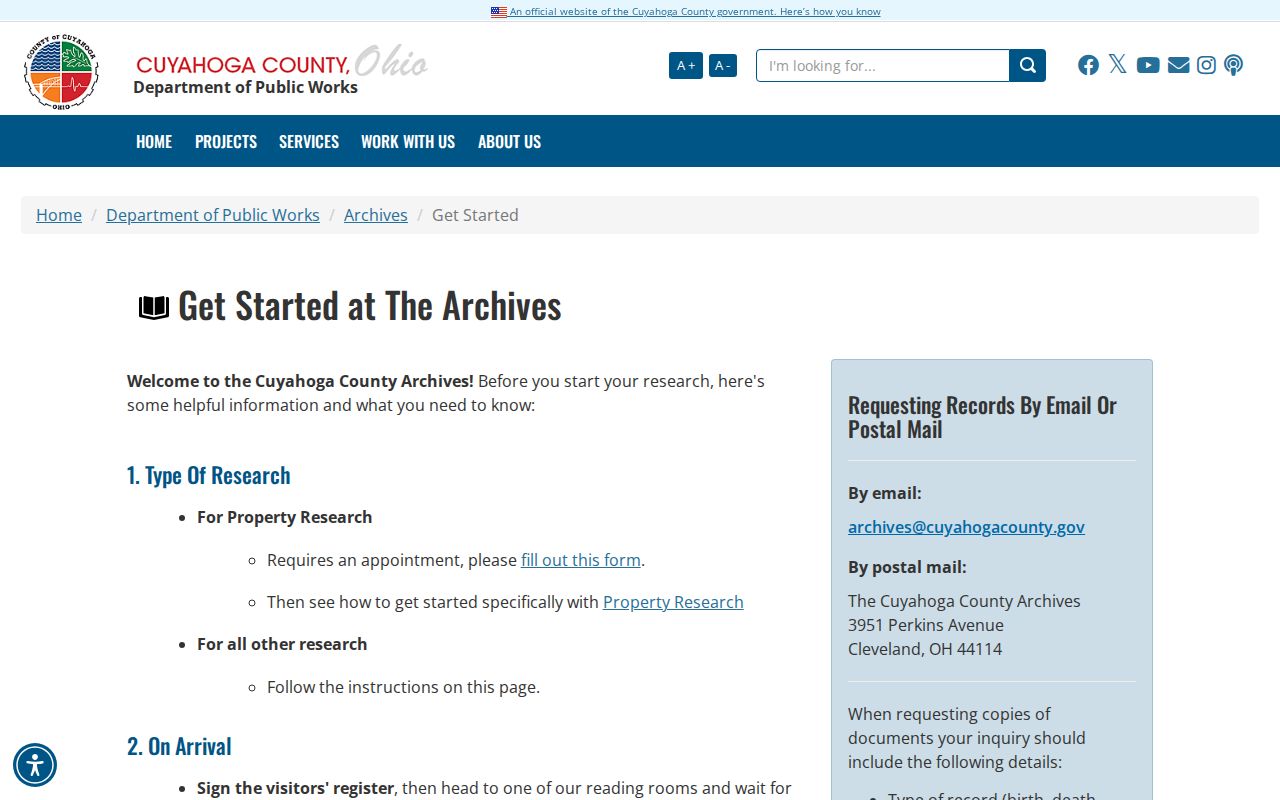
Bring the Parma Heights address, parcel number when known, date range, and any documentary clues. Archives staff can help identify the correct record series or volume.
The property guide asks researchers to record dimensions, street names, and descriptions as they change. That practice is especially useful when a parcel was altered or a historic address no longer matches the current spelling.
Parma Heights Previous Residents Lawful Use
Use a past-residents trail for family history, house history, estate or heir research, and personal property curiosity. Keep living people out of speculation. A dated Parma Heights directory listing, a mailing address, a permit party, and a recorded document are different fields with different limits. Respect redactions and confidential records, and verify a needed official copy with the custodian.
Lawful use. Research the history of a Parma Heights property without trying to track, harass, or harm a living person.
Parma Heights Records After the Trail
A Parma Heights household or ownership trail sometimes ends with a probate or marriage clue. Probate's copies route is the proper source for a formal copy, while an archive or catalog search can help locate the right historic case or event. Preserve the collection title, case or volume details, and whether the source is an index, image, or official copy. That distinction keeps a family-history lead from being overstated.
Cuyahoga Probate Court's copies page is the formal copy route for the court's records.
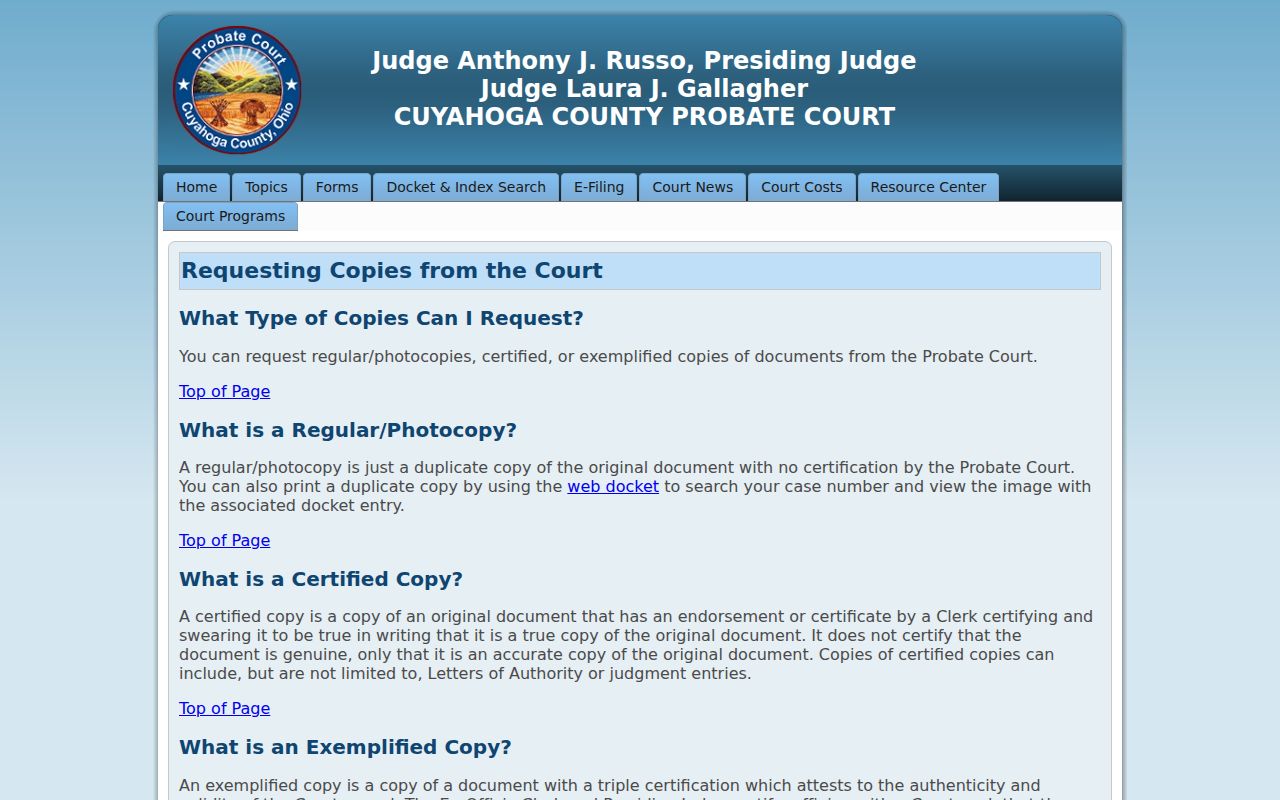
Return to Probate for the court's copy procedure when a formal record is needed, rather than treating a catalog result as the document itself.
FamilySearch's Cuyahoga marriage catalog is another historical discovery route.
A catalog result can help identify a series, but it should be cited separately from a court copy or the underlying image.