
Parma Heights City Directory Collections
The historical Parma Heights directory trail is unusually focused for a suburb. The Cleveland Public Library directory guide identifies a dedicated Parma sequence, followed by West Suburban volumes, instead of sending every searcher into a broad Cleveland run. The volume title and year matter. A listed person, a printed street, and a community abbreviation are dated publication evidence, not proof of a current connection.
| Collection | Years | Where Held | Access |
|---|---|---|---|
| Earlier Parma City Directory | 1941 | Cleveland Public Library History Department | Consult the documented directory guide |
| Parma City Directory | 1946, 1948, 1951, 1953, 1955, 1956, 1958-1963 | Cleveland Public Library | Historical directory collection |
| West Suburban Directory | 1964, 1966-1968, 1970, 1971/72, 1973, 1976, 1979/80 | Cleveland Public Library | Paper and microfilm sets |
| Greater Cleveland By Address | 1923, 1926, and 1960 through its then-current final year | Cleveland Public Library | Address-first volume by date |
| Cleveland City Directory criss-cross sections | Beginning 1929 | Cleveland Public Library | At the end of a volume, subject to geographic coverage |
There are gaps in the listed sequence. A Parma Heights missing year should not be filled with a guess about a household. Check the nearest editions, inspect whether the relevant community appears in that volume, and preserve the repository and access condition in the citation.
Parma Heights Directory Years
The 1941 directory is the first documented starting point in this collection path. The dedicated Parma sequence then appears in selected editions from 1946 through 1963. West Suburban titles take over the later documented schedule. That title shift describes the publication collection, not an automatic street-name or municipal-name change.
Cuyahoga County Public Library genealogy resources provide a second research doorway. They identify in-library access to Ancestry Library Edition and point patrons toward HeritageQuest, FamilySearch resources, Sanborn maps, Cleveland Memory, the CPL necrology and news index, County Archives, Probate, obituary resources, and Western Reserve Historical Society. Those services are companions to, not replacements for, the cited directory page.
The CCPL genealogy resource collection shows the Parma Heights library route available for directory research.
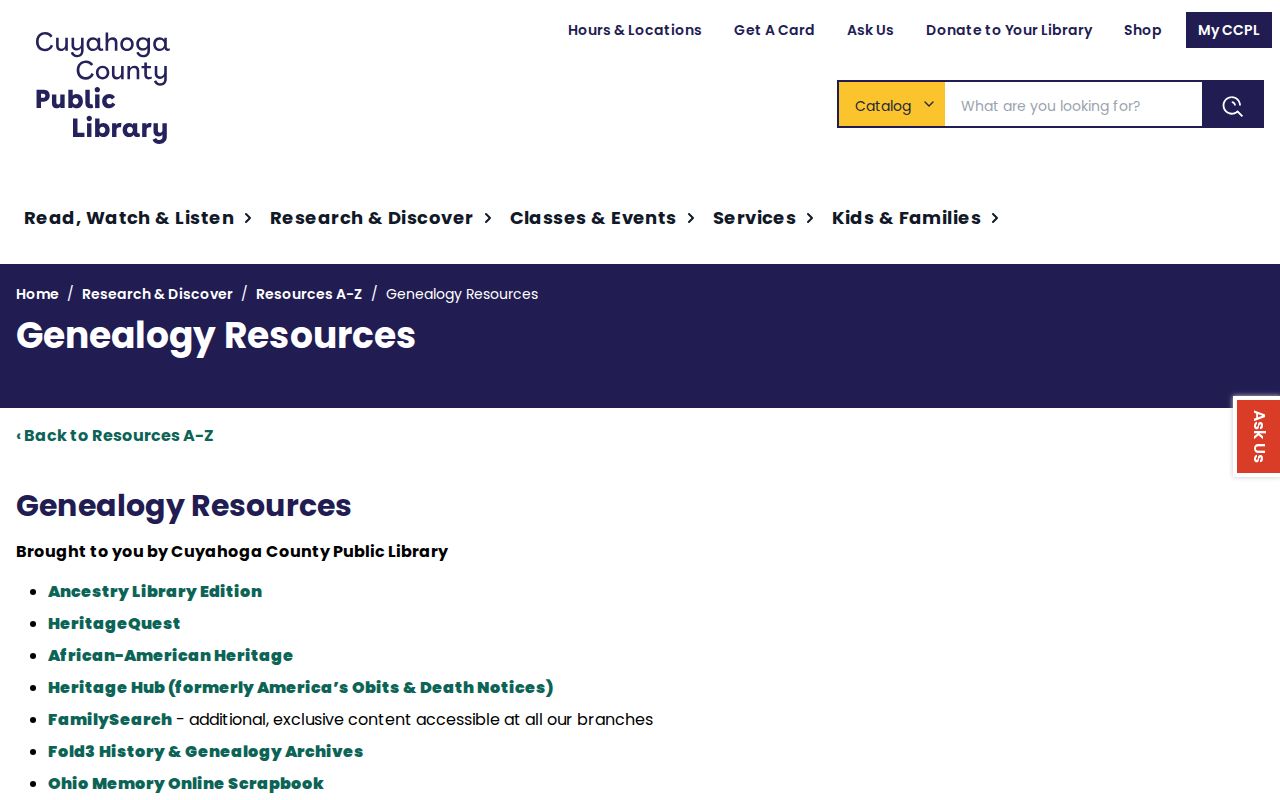
A library resource page can identify the next collection or access method, while the directory volume supplies the dated entry that should be cited.
Note: Record every title exactly as printed because the Parma and West Suburban labels mark different published runs.
Reading a Parma Heights Directory Entry
A historic Parma Heights entry is compact, but it has more parts than a name-and-address list. The digitized 1970 example shows a sequence that may include surname and given name, spouse notation, occupation or employer notation, house number and street, and a community abbreviation. Entry forms vary by publisher and year. Transcribe what is on the page, then keep the title, year, page, and community notation with it.
| Name | Surname and given name identify the printed listing, not a modern identity conclusion. |
|---|---|
| Spouse notation | Where supplied, it is part of the historic entry and can help distinguish similar names. |
| Occupation or employer notation | A period detail in the publication, useful for comparing one printed year to another. |
| Address | Keep the house number, street spelling, directional prefix, and any community code together. |
| Source details | Record directory title, year, page, publisher form, and the repository or digitized item. |
- Criss-cross directory
- An address-first section that organizes listings by street and number rather than alphabetically by person.
- Householder index
- An alphabetical list within a directory volume that helps begin with a person or household name.
- Abbreviation key
- The volume's explanation of shortened labels. Photograph or transcribe it before interpreting a mark.
The digitized West Suburban Directory example makes the printed entry format visible.
The printed page supports a year-specific transcription. It does not establish where anyone lives now.
Parma Heights Directory Code PH
The 1970 digitized West Suburban page carries the local “(PH)” community code. That small mark is worth retaining. It ties an entry to Parma Heights within a broader suburban publication and prevents a citation from losing the community context when several places share a directory volume.
Capture the house number, street, year, page, and “(PH)” together. Do not expand the code into an unverified address history or merge it with an entry for Parma Township or Parma merely because the names are related.
Parma Heights Directories by Address
When the starting point is a house rather than a person, use the right date of a criss-cross or By Address volume. CPL documents Greater Cleveland By Address volumes for 1923, 1926, and 1960 through its then-current final year. Criss-cross sections begin at the end of Cleveland City Directory volumes from 1929. First test the dedicated Parma and West Suburban sequence, then check the address-first route for the target year.
- Write down the historic house number, street spelling, directional prefix, and the year being investigated.
- Open the matching Parma, West Suburban, or address-first volume and inspect its community coverage.
- Search nearby house numbers and street variants instead of assuming a single spelling is complete.
- Compare the printed result with the edition immediately before or after it.
- Keep each year separate. A chronological list is more reliable than a blended list of names.
A number missing from a volume can reflect a vacant lot, an omitted listing, changed numbering, a place outside that edition's coverage, or a scan and index limitation. For current parcel and street evidence, use the separate Parma Heights street directory route rather than treating a historic line as a modern parcel record.
Parma Heights Directory Timeline
Collection titles need local history behind them. Parma Heights separated from Parma Township in 1911 and became a city in 1959. A historical Parma Heights search can therefore surface township, Parma, Parma Heights, or West Suburban wording for the same broader area. That is a catalog clue. It is not permission to combine separate places without checking the year, collection title, and printed community label.
| 1911 | Parma Heights separated from Parma Township. |
|---|---|
| 1941 | The documented earlier Parma directory appears in the library guide. |
| 1946-1963 | Selected dedicated Parma directory editions form the main sequence. |
| 1959 | Parma Heights became a city. |
| 1964-1979/80 | Selected West Suburban editions provide the later published route. |
Cleveland Memory's Parma timeline provides the local chronology used to interpret those catalog terms.
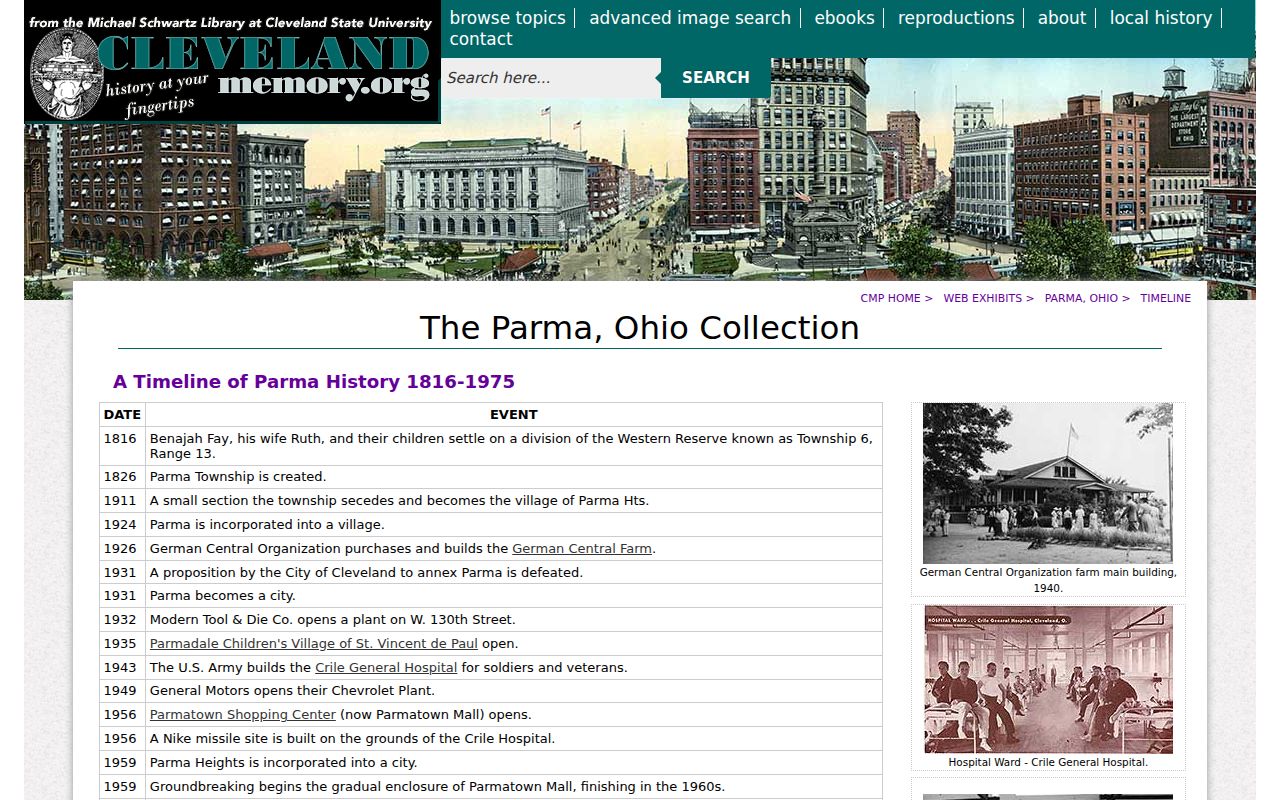
Use the timeline to choose a search term and record year, then let the directory page itself show what was printed.
Parma Heights Directory Archive Access
County Archives is a practical fallback when a Parma Heights directory search needs tax, map, probate, or older county context. Research visitors register and use a reading room. Some work requires an appointment, and the Archives asks requesters to identify no more than ten volumes. Up to 40 self-service copies are free, with later copies listed at $0.03 each. Property research requires an in-person appointment, so confirm current arrangements before the trip.
Bring the Parma Heights street address, parcel number when known, variants, and a date range. The Archives advises researchers to keep changing dimensions, street names, and property descriptions. Its email route is archives@cuyahogacounty.gov, and its office is at 3951 Perkins Avenue in Cleveland. Those details make an archive visit a repeatable research step rather than a vague suggestion.
Western Reserve Historical Society's genealogy library is another collection route for west-suburban directories, census microfilm, county vital indexes, tax microfilm, and its Genealogy Index.
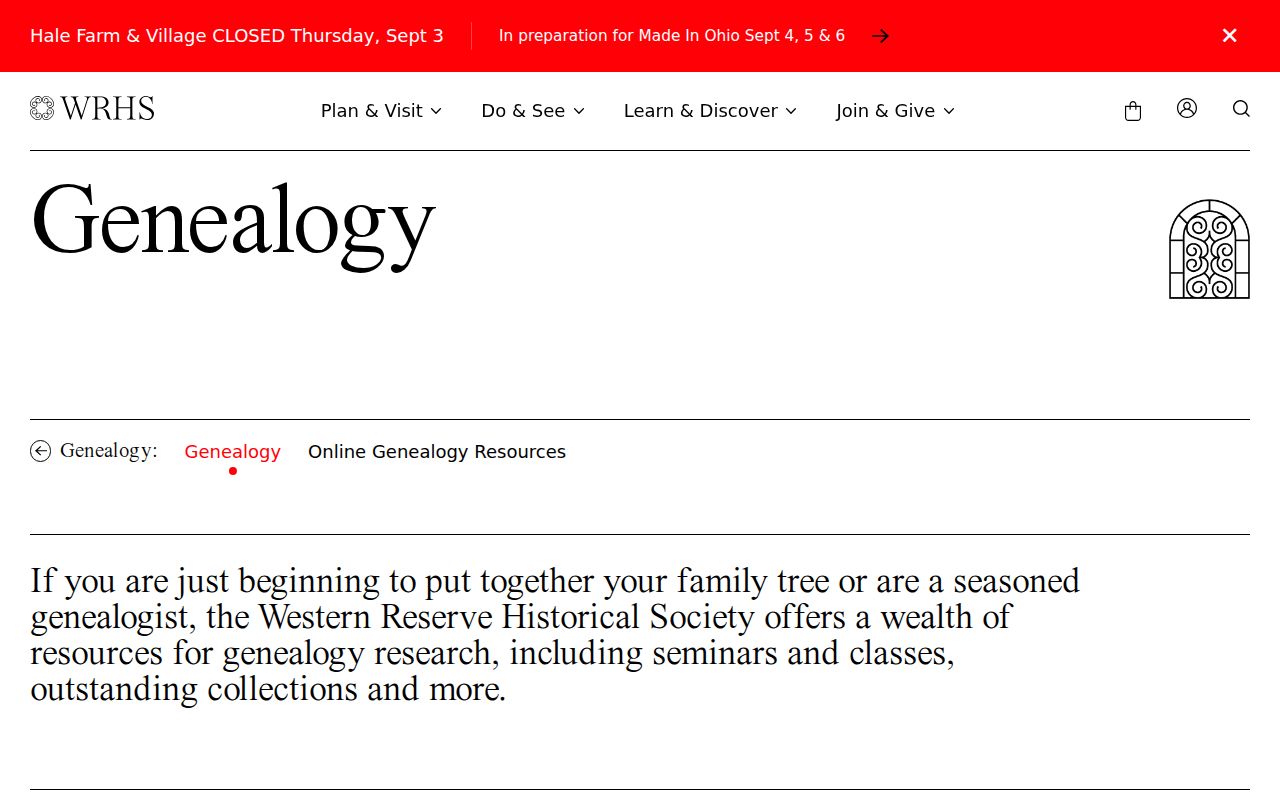
WRHS can be useful when a directory or census clue falls outside the library run, but its discovery index is not a complete record of every relevant source.
Trace Parma Heights Directory Households
A Parma Heights directory shows a listed household or address for its publication date. It does not answer every question about a home, relationship, or later move. The strongest household trail follows adjacent editions first, then pairs a directory date with the closest census and checks a property or probate source only for the separate question that source can answer.
- Find the earliest located directory appearance and transcribe its complete source details.
- Follow the name or address through the next available edition, one year at a time.
- Mark changes in spelling, spouse notation, occupation notation, address, and community code.
- Compare the relevant census year through an authorized library or archive resource rather than assuming a directory is a full household schedule.
- For an ending trail, use the CPL necrology index, which covers Plain Dealer death notices from 1850 to 1975, to locate a notice citation and then inspect the underlying source.
County Archives lists Cleveland directories from 1837 to 1972 as not inclusive, while WRHS describes city and east/west-suburban directory holdings from 1837 to 2000. A Parma Heights gap is therefore a prompt to ask a repository about another volume or format, not proof that a person was absent.
Parma Heights Records After a Gap
When a Parma Heights directory run ends or a name does not appear, use the source that fits the question. County Archives holds tax records from 1819 to 1986 and original map volumes from 1860 to 1945. Its suburban atlases date from 1852, 1874, 1892, and 1903. Those sources can test parcel and street context, but they do not turn a missing directory entry into a conclusion about an occupant.
For family and estate research, FamilySearch's Cuyahoga Probate Court collection covers 1813 to 1932 and may provide a lead to estate, will, administrator, heir, or guardianship material. Cite the underlying image, case, or volume because a search result alone can carry transcription ambiguity.
Note: Keep the directory page and every later archive or probate item as separate evidence with its own date and repository.